
The rupee had lost 21 paise to end at new 10-month low of 56.38 against the dollar on Thursday on fag-end spurt in dollar demand after RBI Governor D Subbarao painted a dim macroeconomic picture.

'Rising Covid cases and localised lockdowns are being closely monitored.'
If the latest strategy reports of some leading foreign institutional investors (FIIs) are anything to go by, then the outlook for the Indian equity market appears bleak. This is, despite section of experts pitching for the current attractive valuations.

The value of P-note investments in Indian markets - equity, debt, hybrid securities and derivatives - stood at Rs 74,027 crore till August-end.

Even if the bull run may continue, most experts say some profit booking is called for, points out Sanjay Kumar Singh.

'In the short term, we may see some disruptions due to Covid, but in the medium-to-long term, we should keep an eye on US inflation and 10-year bond yields.'

The US dollar strengthened against the world currencies after the Turkish lira dived almost 8 per cent, sparking a sell-off in global markets.

Other top losers in the Sensex pack included Bharti Airtel, Asian Paints, TCS, HCL Tech, Tata Steel, SBI, IndusInd Bank and Hero MotoCorp, declining up to 3.28 per cent.
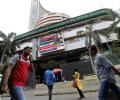
Pharma was the top losing index amid worries about their earnings outlook with Lupin down over 4%

With outlook uncertain for a range of sectors, no one is quite sure of where to invest in stocks

'Earlier-than-expected tapering from the US, followed by rate hikes, and locally, a potential third wave, which mimics the second wave in terms of severity.'

Motilal Oswal, chairman and managing director, Motilal Oswal Financial Services, tells Puneet Wadhwa that with Moody's upgrading India's sovereign rating and earnings growth coming back, the country will remain a hot destination for foreign investors.

Tech Mahindra was the top loser in the Sensex pack, crashing over 9 per cent, followed by Kotak Bank, Axis Bank, TCS, Infosys and HUL. On the other hand, Hero MotoCorp, Bajaj Auto, Bajaj Finance and Titan were the gainers.

The improving earnings and economic outlook has titled the scales back in favour of Indian equities this year, reports Pavan Burugula.
Sustained FII inflows and fresh spell of buying by domestic institutional investors fuelled the rally

With a new government in place, the outlook on economy and political stability has improved

'Slower-than-anticipated recovery can be a bigger risk this time than a liquidity-driven event -- at least for India.'
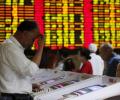
Most markets have seen significant erosion in investors' wealth this year

In the near term, the key driver will still be the government's fiscal spending.

Analysts attribute the surge to a host of factors, particularly the interest shown by the retail investors in these two market segments.

Year 2017 will be a benign year for FII flows into India feels Akash Singhania, deputy chief investment officer, DHFL Pramerica Asset Managers.

The FPI holding in India's top 100 companies, which are part of the Nifty 100 index, declined to 24.23 per cent on average at the end of March this year, from a high of 27.5 per cent at the end of March 2021. This is the lowest FPI holdings in India's top listed companies in at least three years. A general sell-off by FPIs has weighed on stock prices and the benchmark S&P BSE Sensex is down 8.5 per cent, from its 52-week high made in October 2021. Most analysts expect FPI flows to remain weak in FY23 as well, given rising bond yields in the US and an expected earnings slowdown in India due to high inflation and commodity prices.

Tata Motors was the biggest loser in the Sensex pack, tumbling 2.47 per cent, followed by Reliance Industries (2.44 per cent), Maruti (1.84 per cent), SBI (1.76 per cent) and Bajaj Finance (1.23 per cent).

The government kept its nerve in the face of a massive shock. It chose not to resort to a massive fiscal stimulus. It focused instead on providing liquidity support and easing restrictions on movement in stages, observes T T Ram Mohan.

Since 2005, in 8 out of 10 years (except in CY11 and CY14) the benchmark indices have given positive returns in December.

In UK, France and Germany, the president and CEO of Edelweiss Securities, anticipates votes incrementally in favour of local protection and de-globalisation.

'The true fruits of the attack on black money, what Raghuram Rajan did for the banking system, and what technology is doing for us will come in FY19, which, not surprisingly, is the year running up to the next Lok Sabha elections.'

A'Market valuation is another concern.'
'India is trading at steep valuations and there have been a number of IPOs, especially in the insurance sector, that have had an impact on secondary market liquidity.'

Weakness of dollar in the overseas market also boosted the domestic currency, a forex dealer said.

Foreign investors have bought around $2.4 billion in both debt and equity so far in October, pushing the total inflows to nearly $36 billion so far in the year.

The Sensex posted its biggest single-day jump in over a decade at 1,921 points and investors' wealth soared by a staggering Rs 6.8 lakh crore after Finance Minister Nirmala Sitharaman delivered a surprise cut in corporate tax rates on Friday.

Saurabh Mukherjea, CEO, Ambit Capital, says he is advising clients to either take a genuinely long-term view on stocks or diversify the portfolio with stocks, bonds and gold for those with a short-term view.

Investors continue to make losses on investments.

Mahesh Nandurkar, executive director and India Strategist at CLSA, talks to Puneet Wadhwa ahead of their 21st India Forum on his interpretation of how the markets have played out over the past few months, the road ahead, and his sector preferences in this backdrop.

Encouraged by foreign exchange reserves touching record levels, the Reserve Bank on Tuesday doubled the annual overseas investment ceiling for individuals to $2,50,000.

Investors are anxious over the US-China trade tension, a sharp devaluation in yuan and uncertainty over Kashmir issue.

As the reform process is expected to gain further momentum, the Indian rupee will continue to outperform its Asian peers, which are likely to weaken further against the US dollar in 2015, says an HSBC report.

'Macro headwinds are rising for Indian equities in the form of rising commodity prices, especially oil, depreciating rupee, fiscal challenges, election-related uncertainty and upside risks to inflation'
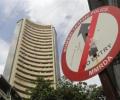
Also keenly watching inflation numbers, with wholesale inflation data expected today

So long as there are concerns about world trade, growth and oil prices, the domestic market will remain volatile.
